
Table of Contents
- Understanding Dry, Dull Skin: The Science Behind the Problem
- The Core Steps of a Simple Skincare Routine for Dry, Dull Skin
- How to Layer Skincare Products for Maximum Absorption
- Benefits of Retinol for Dry Skin and Early Aging
- Ingredients to Avoid and Budget-Friendly Ingredient Swaps
- Internal Hydration and Lifestyle Factors That Restore Skin Health
- How Long It Takes to See Results and Skin Barrier Repair Timeline
- Conclusion
Last Updated: August 27, 2026
Understanding Dry, Dull Skin: The Science Behind the Problem
Dry, dull skin occurs when your skin barrier loses its ability to retain moisture and protect itself from environmental stressors. Your skin barrier, made up of ceramides, cholesterol, and fatty acids, works like mortar between bricks. When weakened, water escapes through transepidermal water loss, leaving skin dehydrated, dull, and vulnerable to irritation.
Understanding whether you have dehydrated skin or genuinely dry skin matters. Dehydrated skin is a temporary condition caused by moisture loss and can happen to any skin type. Dry skin is a skin type characterized by a lack of natural oils. You can have both simultaneously, which complicates treatment.
Signs of Dehydrated Skin vs. Dry Skin
Dehydrated skin shows: tight sensation even after moisturizing, pronounced fine lines, dark circles, and uncomfortable texture. It looks dull because it lacks the plumpness that water provides to skin cells.
Dry skin presents with flaking, peeling, rough patches that persist with hydration, itching, and uneven product absorption. It's a consistent condition rather than a temporary response.
The distinction matters because dehydrated skin responds quickly to hydrating serums and layered moisture, while dry skin needs barrier repair with ceramides and occlusives.
Why Your Skin Barrier Matters
Your skin barrier is your first line of defense against free radicals, pollution, bacteria, and moisture loss. When compromised, everything penetrates deeper than it should, causing inflammation and irritation. A healthy barrier maintains optimal hydration and regulates which substances enter your skin, keeping it calm and functional.
Barrier repair typically takes 2 to 4 weeks of consistent care before meaningful improvement appears (dermatology.org). This is why many people abandon routines too early.
The Core Steps of a Simple Skincare Routine for Dry, Dull Skin
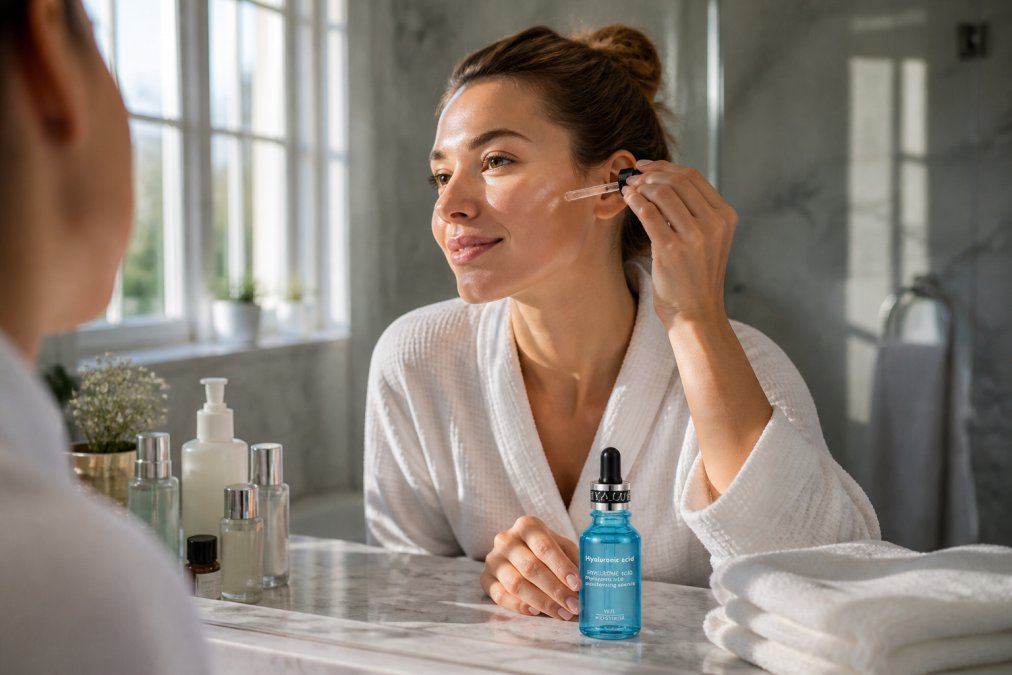
A science-backed routine for dry, dull skin requires four core steps: cleanse, hydrate, moisturize, and protect. The order matters because each step prepares your skin for the next one.
Step 1: Gentle Cleansing Without Stripping
Most people damage their skin barrier at the cleansing step by using hot water, harsh sulfates, or over-cleansing. Use a pH-balanced cleanser with hydrating ingredients like glycerin or hyaluronic acid. Lukewarm water is preferable to hot water, which strips oils faster. Cleanse once in the morning and once at night. For makeup removal, consider double cleansing: use a gentle oil or micellar water first, then follow with your regular cleanser. Pat skin dry gently instead of rubbing.
Step 2: Hydrating Serum Application
A hydrating serum is essential for dry, dull skin. Serums contain humectants like hyaluronic acid and glycerin that draw water into the skin. Apply to damp skin immediately after cleansing using 2-3 drops, pressing gently rather than rubbing. Wait 30 seconds to 1 minute before the next step.
Hyaluronic acid is the gold standard humectant, holding up to 1000 times its weight in water (peer-reviewed research). The VIRALCORE HEALTH Beauty and Moisturizing Facial Skin Care Products contain sodium hyaluronate and glycerol, which work synergistically to draw moisture deep into skin layers.

Step 3: Moisturizing and Barrier Repair
Apply a moisturizer containing both emollients and occlusives. Emollients like oils and butters soften skin, while occlusives like ceramides and petrolatum seal moisture in. Look for moisturizers with ceramides, cholesterol, and fatty acids, the exact lipids your barrier needs. Apply while skin is still slightly damp.
For extra barrier support, consider a facial oil as the final step. The VIRALCORE HEALTH Facial Moisturizing Recovery Oil Firming Care includes collagen, licorice root extract, and vitamin E, strengthening the barrier while providing antioxidant protection.
Step 4: Sun Protection Daily
UV rays generate free radicals that break down collagen and degrade the barrier. Use a broad-spectrum sunscreen with at least SPF 30 daily, even on cloudy days, as the final morning step (the American Academy of Dermatology).
How to Layer Skincare Products for Maximum Absorption
Apply products from thinnest to thickest consistency: cleanser → hydrating serum → lightweight moisturizer → facial oil (optional) → sunscreen (morning only). Wait 30 to 60 seconds between steps to allow absorption and prevent pilling. Use gentle pressing motions rather than rubbing. Don't mix products together, as this can alter pH and reduce ingredient effectiveness.
Benefits of Retinol for Dry Skin and Early Aging
Retinol increases cell turnover and stimulates collagen production, improving texture and reducing fine lines. However, it can be drying on compromised skin. Start with 0.25% to 0.3% concentration, using it 2 to 3 times weekly initially. Apply to completely dry skin, waiting 20 minutes after cleansing. Follow with a rich moisturizer to buffer irritation.
Results take 8 to 12 weeks of consistent use. Patience is essential; rushing the introduction will damage your barrier further.
Ingredients to Avoid and Budget-Friendly Ingredient Swaps
Avoid fragrance, alcohol (ethanol), sulfates, benzoyl peroxide, and essential oils, all irritate dry skin and disrupt the barrier.
Budget-friendly alternatives include hyaluronic acid and glycerin, found in many affordable products. Niacinamide (vitamin B3) strengthens the barrier and reduces inflammation. Vitamin C protects against free radicals and brightens dull skin. Plant oils like jojoba, squalane, and rosehip provide barrier support without premium pricing. Centella asiatica (cica) soothes irritation and supports barrier repair; the VIRALCORE HEALTH Beauty Madagascar Centella Asiatica Facial Skin Care harnesses this ingredient at an accessible price point.

Internal Hydration and Lifestyle Factors That Restore Skin Health

Skincare products alone cannot fix dry, dull skin if your lifestyle works against them. Drink adequate water daily, aim for pale yellow urine. Include electrolyte-rich foods like leafy greens and coconut water.
Sleep is when your body repairs itself, including your skin barrier. Poor sleep increases inflammation and cortisol, damaging the barrier. Aim for 7 to 9 hours of consistent sleep; many people see visible improvements in texture and dullness within 2 weeks.
Stress elevates cortisol, increasing inflammation and weakening the barrier. Stress management through meditation or exercise directly improves skin. Nutrition supports skin health: omega-3 fatty acids support barrier function, antioxidants protect against free radicals, and protein provides amino acids for collagen synthesis. A diet rich in whole foods shows results within 4 to 6 weeks.
The VIRALCORE HEALTH NAD Cellular Renewal Capsules support cellular energy metabolism and skin elasticity through niacinamide ribonucleoside, quercetin, and resveratrol, working systemically to support skin health from within.

How Long It Takes to See Results and Skin Barrier Repair Timeline
Skin barrier repair follows a predictable timeline:
Weeks 1-2: Skin feels slightly better and less tight. This is hydration, not barrier repair.
Weeks 3-4: Barrier function improves noticeably. Redness decreases, sensitivity to products reduces.
Weeks 5-8: Visible texture improvements emerge. Fine lines appear less pronounced, dullness fades.
Weeks 9-12: Comprehensive barrier restoration. Skin is noticeably smoother, more radiant, and resilient.
Beyond 12 weeks: Continued improvement as skin builds resilience and cellular turnover optimizes.
| Timeline | What to Expect | Visible Changes |
|---|---|---|
| Weeks 1-2 | Hydration, comfort | Reduced tightness |
| Weeks 3-4 | Barrier function improves | Reduced redness, less sensitivity |
| Weeks 5-8 | Texture refinement | Smoother skin, less dullness |
| Weeks 9-12 | Barrier restoration | Radiant appearance, fine line reduction |
| Beyond 12 weeks | Resilience building | Sustained improvement, early aging reversal |
Fixing dry, dull skin requires addressing the root cause, a compromised skin barrier, not just treating surface symptoms. A simple, science-backed routine that cleanses gently, hydrates deeply, repairs the barrier, and protects from sun damage works because it aligns with how skin actually functions. Add consistent sleep, adequate hydration, and stress management, and you're restoring your skin's fundamental health. VIRALCORE HEALTH's curated skincare solutions, including our hydrating serums and barrier-repair moisturizers, are designed to support this restoration process with clinically effective ingredients. Start with the core routine, commit to 8 to 12 weeks, and you'll see the transformation that comes from actually fixing the problem instead of masking it.
Frequently Asked Questions
What is the difference between dehydrated skin and dry skin?
Dehydrated skin lacks water and often feels tight or sensitive, even if it produces oil. Dry skin lacks natural oils (sebum) and typically feels rough or flaky. Both can appear dull. Dehydrated skin responds quickly to hydrating serums with hyaluronic acid, while dry skin needs occlusive moisturizers with ceramides and emollients to repair the lipid barrier and restore moisture retention.
How do I know if a skincare routine is actually science-backed?
Look for products containing clinically proven ingredients like hyaluronic acid for hydration, ceramides for barrier repair, niacinamide for redness reduction, and broad-spectrum sunscreen. Check if the brand cites third-party testing or dermatologist recommendations. VIRALCORE HEALTH products include ingredients like sodium hyaluronate and centella asiatica, both supported by clinical efficacy research. Avoid marketing language alone; focus on the active ingredient list and concentration.
How long does it take to see results from a new skincare routine for dry, dull skin?
Most people notice improved hydration and skin texture within 2-4 weeks of consistent use. Barrier repair and reduction in dullness typically take 6-8 weeks. If using retinol, expect 8-12 weeks to see visible improvements in skin renewal and early signs of aging. Consistency matters more than speed; skipping applications delays results. Internal hydration and lifestyle factors also influence the timeline.
Can I use retinol if I have dry skin?
Yes, but start slowly. Retinol accelerates cell turnover and boosts collagen production, making it valuable for dry skin and early aging concerns. Begin with a low concentration once or twice weekly, always with a moisturizer underneath. Retinol can initially increase dryness and sensitivity, so pair it with hydrating serums and occlusive moisturizers. Avoid retinol if your skin barrier is severely compromised; repair it first with gentle cleansing and barrier-restoring products.
This article was written using GrandRanker