
Table of Contents
- Understanding Skin Changes in Your 40s
- How to Fix Skin Barrier Hydration and Moisture Loss
- Best Retinol for Beginners Over 40
- Sun Protection and Photoaging Prevention
- Essential Anti-Aging Ingredients Beyond Retinoids
- Dermatologist Recommended Anti-Aging Routine Structure
- Hormonal Impact on Skin and Lifestyle Factors
- Building a Budget-Conscious Professional Skincare Routine
Last Updated: August 26, 2026
Understanding Skin Changes in Your 40s
Your 40s bring fundamental cellular shifts: collagen production drops, cellular turnover slows, and skin's ability to retain moisture diminishes. Hormonal changes compound these effects, making skincare distinctly different from your 30s. Your skin faces three simultaneous challenges: reduced cellular regeneration, compromised barrier function, and accumulated sun damage. Fine lines deepen, texture becomes uneven, and natural luminosity fades.
What makes this stage critical is that prevention and treatment must happen simultaneously. You're addressing existing damage while preventing accelerated aging. The good news: your 40s are not too late to see dramatic improvements.
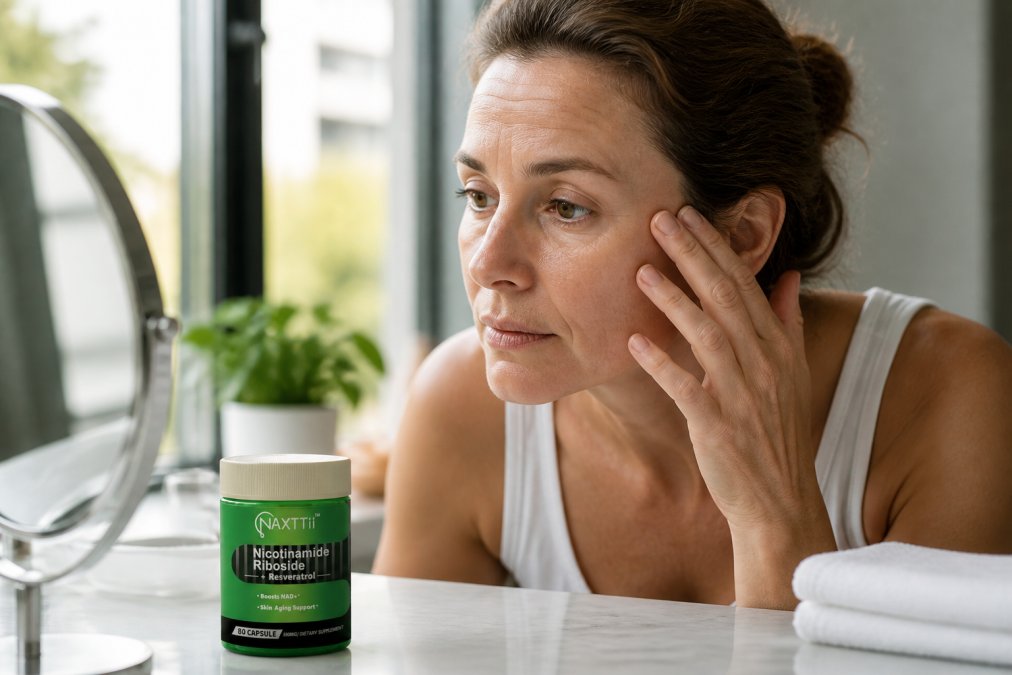
How to Fix Skin Barrier Hydration and Moisture Loss
Barrier repair is foundational. Without a functioning lipid barrier, every other product becomes less effective because your skin cannot retain benefits. Your skin barrier is a lipid-rich layer acting like a brick-and-mortar wall: ceramides and cholesterol form the "mortar" sealing gaps between cells. When this barrier breaks down, water escapes and irritants penetrate more easily.
The Role of Hyaluronic Acid and Humectants
Hyaluronic acid holds up to 1000 times its weight in water, drawing moisture from air and deeper skin layers to the surface (peer-reviewed research). However, it only works effectively in humid environments and on damp skin. Layer hyaluronic acid serums immediately after cleansing while skin is still slightly damp.
VIRALCORE HEALTH's Beauty And Moisturizing Facial Skin Care Products contain sodium hyaluronate (the salt form of hyaluronic acid), which penetrates more effectively than the larger hyaluronic acid molecule. This formulation targets hydration barriers specifically for mature skin experiencing dryness.

Beyond hyaluronic acid, glycerin and propylene glycol function as secondary humectants working synergistically. A serum containing multiple humectants at different molecular weights creates redundancy, if one pathway becomes compromised, others continue delivering hydration.
Lipid Barrier Repair with Ceramides and Peptides
Ceramides are the structural lipids your skin naturally produces less of after 40. Ceramide NP, Ceramide AP, and Ceramide EOP are the three most important for barrier function. Peptides signal your skin to increase collagen and elastin production while strengthening barrier structure.
VIRALCORE HEALTH's Facial Moisturizing Recovery Oil Firming Care combines lipid-rich ingredients with peptide support. The formula includes collagen and sweet almond oil to reinforce the barrier while peptides work on cellular signaling. Occlusives like squalane and plant oils seal in hydration but should be applied last in your routine.
| Barrier Component | Primary Function | Best Ingredients |
|---|---|---|
| Humectants | Draw moisture to surface | Hyaluronic acid, glycerin |
| Lipids | Fill gaps between cells | Ceramides, cholesterol, squalane |
| Proteins | Signal cellular repair | Peptides, collagen |
| Occlusives | Seal moisture in | Plant oils, waxes |
Best Retinol for Beginners Over 40
Retinoids are non-negotiable for skincare in your 40s. They're the only ingredient class with clinical evidence for reducing fine lines, improving skin texture, and stimulating collagen production. Retinol is a weaker form of vitamin A that your skin must convert to retinoic acid to be effective. For beginners in their 40s, retinol is the appropriate starting point.
Starting Low and Building Tolerance
Begin with retinol concentration between 0.25% and 0.5%. Start twice weekly, not nightly. Your skin needs 4-6 weeks to build tolerance. During this period, some peeling and mild irritation is normal and indicates the ingredient is working.
Apply retinol to completely dry skin after hydrating serums have fully absorbed. Wait at least 20 minutes after cleansing before applying retinol. Some practitioners recommend the "sandwich method", applying a thin moisturizer layer, then retinol, then another moisturizer layer, for sensitive skin, though this dilutes the retinol's effectiveness somewhat.
Ingredient Layering Safety and Timing
Never combine retinol with vitamin C, niacinamide, or other active ingredients on the same night during your adjustment phase. Retinol and acids (AHAs, BHAs, vitamin C) should be used on alternate nights during the first month. Once your skin tolerates retinol well, carefully introduce other actives, starting with just one additional ingredient.
Sunscreen becomes non-negotiable when using retinol. Retinoids increase cell turnover, making skin temporarily more photosensitive.
Sun Protection and Photoaging Prevention
Photoaging, damage from cumulative sun exposure, accounts for roughly 80% of visible aging (the American Academy of Dermatology). By your 40s, you've accumulated significant sun exposure, but preventing additional damage remains critical. Sun protection is the highest-ROI skincare step because it prevents new damage rather than reversing existing damage.
SPF measures protection against UVB rays, which cause burns. UVA rays penetrate deeper and cause photodamage leading to fine lines, hyperpigmentation, and loss of elasticity. Look for "broad spectrum" sunscreens protecting against both UVA and UVB. SPF 30 blocks approximately 97% of UVB rays; SPF 50 blocks about 98% (the FDA). Consistent daily use matters far more than the specific SPF number.
Apply sunscreen generously, most people apply far too little to achieve labeled SPF protection. The standard recommendation is a quarter teaspoon for the face. Reapply every two hours if outdoors, or after swimming or excessive sweating.
Mineral sunscreens (zinc oxide, titanium dioxide) reflect UV rays and are less likely to cause irritation in sensitive skin. Chemical sunscreens (avobenzone, oxybenzone, octinoxate) absorb UV rays and feel lighter on skin. For mature skin, mineral formulations often work better because they're less likely to irritate a compromised barrier.
Essential Anti-Aging Ingredients Beyond Retinoids
While retinoids drive cellular regeneration, other ingredients address specific aging concerns simultaneously. A comprehensive approach combines multiple mechanisms rather than relying on a single ingredient.
Vitamin C, Niacinamide, and Antioxidants
Vitamin C (L-ascorbic acid) is the gold standard antioxidant for skincare. It neutralizes free radicals generated by sun exposure and environmental stress, preventing additional damage. Vitamin C also stimulates collagen synthesis and brightens hyperpigmentation. L-ascorbic acid is unstable and degrades quickly when exposed to light and air. Look for products in opaque, airtight packaging.
Niacinamide (vitamin B3) strengthens the barrier, reduces inflammation, and minimizes pore appearance. It's particularly valuable in your 40s because it supports barrier function while reducing irritation that retinoids sometimes cause.
Antioxidants like resveratrol, quercetin, and ferulic acid work synergistically with vitamin C. A serum containing vitamin C plus ferulic acid and vitamin E provides superior antioxidant protection compared to vitamin C alone.
Tranexamic Acid for Hyperpigmentation
Tranexamic acid addresses age spots and uneven skin tone specifically. It inhibits melanin production and is gentler than hydroquinone or other depigmenting agents. Use tranexamic acid consistently for 8-12 weeks to see visible improvement. Combining tranexamic acid with niacinamide and gentle exfoliation accelerates results.
Dermatologist Recommended Anti-Aging Routine Structure
A functional routine for skincare in your 40s follows a specific sequence based on molecular weight and ingredient chemistry.
Morning Routine: Gentle Cleansing to SPF Protection
Start with a gentle cleanser that doesn't strip your barrier. Foaming cleansers are too harsh for mature skin; cream or micellar cleansers remove dirt and makeup without disrupting the lipid barrier. Cleanse for no more than 30 seconds.
Apply your hydrating serum (containing hyaluronic acid or glycerin) to damp skin immediately after cleansing. Follow with any treatment serums, vitamin C, niacinamide, or antioxidant formulations. Apply moisturizer while skin is still slightly damp, trapping hydration from previous layers.
Finish with broad-spectrum SPF 30 or higher. Apply generously and wait a few minutes for it to set before applying makeup.
Evening Routine: Exfoliation, Active Ingredients, and Recovery
Evening is when you introduce stronger actives because you're not exposing skin to sun immediately afterward. Start with a gentle cleanser again; cleanse twice if you wore makeup or sunscreen.
Apply your exfoliant (AHA or BHA) 2-3 times weekly, not nightly. After exfoliation, wait 10 minutes before applying other actives. Apply your retinol or retinoid on non-exfoliation nights. Follow with your hydrating serum, then a barrier-supportive moisturizer. If your skin is very dry, add an occlusive oil or balm as the final step.
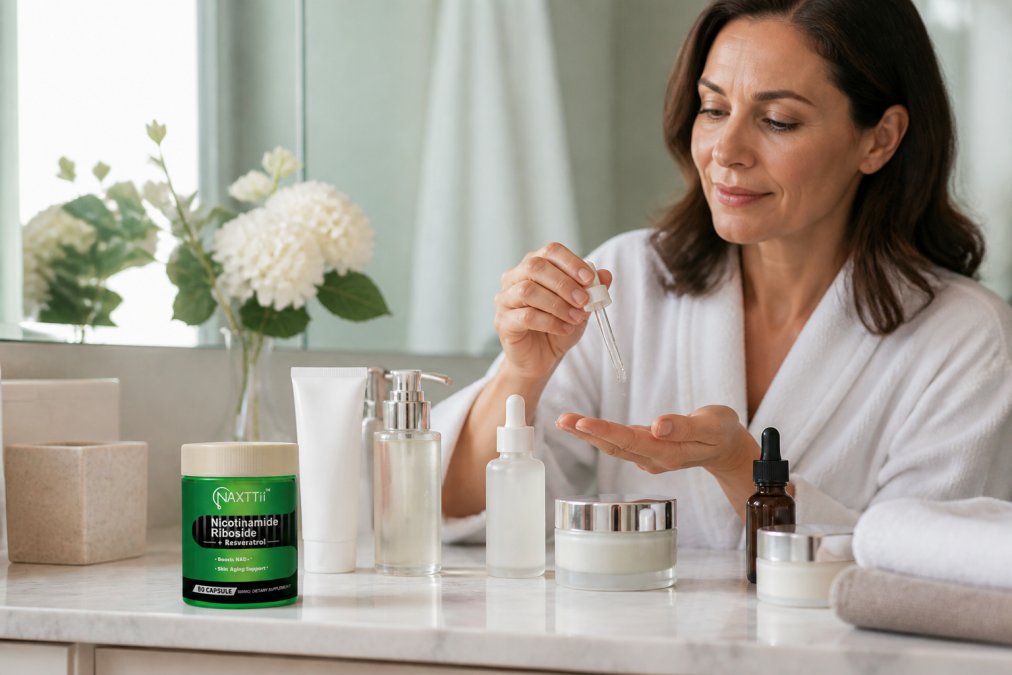
Hormonal Impact on Skin and Lifestyle Factors
Hormonal fluctuations in your 40s significantly impact skin. Declining estrogen reduces hyaluronic acid production in skin, contributing to dryness. Sleep quality directly affects skin barrier function and collagen synthesis. Aim for 7-9 hours nightly, this is fundamental to skincare.
Stress elevates cortisol, which breaks down collagen and impairs barrier function. Stress management has measurable effects on skin inflammation and barrier health. Nutrition impacts skin from within. Antioxidant-rich foods (berries, leafy greens, nuts) provide internal protection. Adequate protein supports collagen synthesis. Omega-3 fatty acids (fish, flaxseed) strengthen the lipid barrier. Drink sufficient water throughout the day to maintain barrier function.
Building a Budget-Conscious Professional Skincare Routine
Effective skincare in your 40s doesn't require spending hundreds monthly. Strategic product selection focuses on evidence-backed ingredients rather than brand prestige.
Start with the non-negotiable foundation: gentle cleanser, hydrating serum with hyaluronic acid, moisturizer, and broad-spectrum SPF. These four products address primary aging concerns.
Add retinol as your first active ingredient. A functional retinol product lasts 2-3 months with proper use. Once your skin tolerates retinol, add a vitamin C serum or niacinamide product. These provide antioxidant support and barrier strengthening without retinol's irritation potential.
Skip products promising multiple functions simultaneously. A "7-in-1 anti-aging serum" masks diluted concentrations of many ingredients, none at sufficient levels to be effective.
VIRALCORE HEALTH offers targeted formulations avoiding unnecessary complexity. The Beauty And Moisturizing Facial Skin Care Products ($16.62) provides hydration support with hyaluronic acid and glycerin. The Facial Moisturizing Recovery Oil Firming Care ($20.11) combines lipid support with peptides for barrier repair and collagen stimulation. For cellular support beyond topical skincare, VIRALCORE HEALTH's NAD Cellular Renewal Capsules ($56.00) provide niacinamide ribonucleoside, quercetin, and resveratrol, ingredients supporting cellular energy metabolism and collagen production from within.

Build your routine methodically. Add one new product every 4-6 weeks, allowing your skin to adapt and ensuring you can identify which products are actually working.
The most significant barrier to visible skin improvement in your 40s isn't access to advanced ingredients, it's consistency and proper technique. Skincare in your 40s requires understanding that your skin's needs have fundamentally changed. Start with barrier support and sun protection, add retinoids gradually, and build from there. VIRALCORE HEALTH's science-backed formulations support this progression with products designed specifically for mature skin renewal. This intentional approach delivers measurable results within 8-12 weeks.
Frequently Asked Questions
What are the most important ingredients for skincare in your 40s?
Retinoids, hyaluronic acid, niacinamide, vitamin C, and broad-spectrum sunscreen form the foundation of effective skincare for aging skin in your 40s. Retinoids boost cellular turnover and collagen production. Hyaluronic acid provides deep hydration to support the skin barrier. Niacinamide strengthens barrier repair and reduces sensitivity. Vitamin C offers antioxidant protection against photoaging. Sunscreen with SPF 30+ prevents further sun damage, which is critical since photoaging accounts for most visible aging.
Is it too late to start using retinol at 40?
No, 40 is an ideal time to start retinol if you haven't already. Your skin benefits significantly from retinoids' ability to increase cellular turnover and stimulate collagen production, both of which decline in your 40s. Begin with a low concentration (0.25-0.3%) or retinol alternatives like retinaldehyde, then gradually increase frequency and strength over 8-12 weeks. Pair it with a good moisturizer and sunscreen to manage any initial sensitivity.
How do I fix my skin barrier if it's compromised?
Focus on hydration and lipid barrier repair. Use gentle cleansing to avoid stripping natural oils. Apply hydrating serums with hyaluronic acid, then lock in moisture with a ceramide-rich moisturizer or recovery oil. Products containing peptides and niacinamide support barrier function. Avoid active ingredients (retinoids, acids, vitamin C) temporarily until sensitivity subsides. This repair phase typically takes 2-4 weeks. The Facial Moisturizing Recovery Oil with collagen and vitamin E provides targeted barrier support.
What's the difference between retinol and retinoids?
Retinol is a gentler, over-the-counter form of vitamin A that your skin converts to retinoic acid. Retinoids are prescription-strength or professional-grade derivatives that work faster but can cause more irritation. For beginners over 40, retinol or retinol alternatives offer effective results with fewer side effects. Prescription retinoids (tretinoin, adapalene) are reserved for those who've built tolerance or have severe photoaging. Both increase cellular turnover and collagen production.
How does hormonal change in your 40s affect skin?
Hormonal shifts in your 40s, particularly declining estrogen, reduce collagen and elastin production, decrease skin thickness, and impair the skin barrier's ability to retain moisture. This leads to increased fine lines, loss of elasticity, and heightened sensitivity. Stress hormones like cortisol can trigger inflammation and worsen hyperpigmentation. Supporting skin health through consistent hydration, antioxidants, and preventative care becomes more critical. Lifestyle factors like sleep and stress management directly influence hormonal balance and skin appearance.
What's the best way to layer skincare products?
Apply products from thinnest to thickest consistency: cleanser, toner, essence, serum, eye cream, moisturizer, then oil. Active ingredients like retinol and vitamin C go on clean, dry skin before moisturizer. Wait 10-15 minutes between retinol and other actives to prevent irritation. Never mix retinoids with acids or vitamin C in the same routine; alternate them on different nights. Sunscreen is always the final step in the morning. This layering prevents pilling and maximizes absorption and efficacy.
Do I need different products for morning and evening routines?
Yes. Morning routines prioritize protection: gentle cleanse, hydrating serum, eye cream, moisturizer, and broad-spectrum SPF 30+. Evening routines focus on renewal: gentle cleanse, optional exfoliation 2-3 times weekly, active ingredients (retinol or vitamin C), hydrating serum, and richer moisturizer or recovery oil. Your skin's repair and cellular regeneration peak at night, making evening the ideal time for potent actives. Morning protection prevents photoaging, while evening support addresses existing damage.
How much should I spend on an effective skincare routine for aging skin?
Effective skincare doesn't require spending hundreds monthly. A basic routine includes a gentle cleanser, hydrating serum with hyaluronic acid, moisturizer, and sunscreen. Add retinol and optional actives as needed. VIRALCORE HEALTH's curated products like the Facial Moisturizing Recovery Oil ($20.11) and Beauty Moisturizing Facial Skin Care ($16.62) deliver professional-grade results without premium markups. Consistency matters more than price; affordable products used daily outperform expensive ones used sporadically.
This article was written using GrandRanker