
Table of Contents
- What Professional Grade Skincare Actually Means
- Medical Grade Skincare vs Drugstore: What You're Really Paying For
- Hyaluronic Acid Benefits for Skin and How to Use It at Home
- Retinol Usage for Beginners: Start Low, Build Slowly
- Ingredient Layering Conflicts to Avoid in Your Professional Grade Skincare Routine
-
Top Professional Grade Skincare Products for Home Use
- Hyaluronic Acid Facial Essence ($16.62), Hydration Foundation
- Madagascar Centella Asiatica Nursing Solution ($42.21), Barrier Repair
- Eye Cream 30ml ($19.15), Targeted Periorbital Treatment
- Iontophoresis Beauty Device ($262.17), Clinical Technology at Home
- Hot Cold Compress Dual-Use Beauty Instrument ($231.21), Multi-Modal Treatment
- Budget-Friendly Clinical Alternatives and Sustainability Considerations
- Conclusion
Last Updated: August 24, 2026
Most skincare marketed as "professional" is diluted, ineffectively delivered, and unstable. At VIRALCORE HEALTH, we offer a curated selection of science-backed rituals designed to help you restore your everyday life with intention.
Professional grade skincare for home use applies dermatologist-level active ingredients and delivery technologies in a personal setting, producing measurable improvements in skin texture, radiance, and barrier function when done correctly. Done carelessly, it triggers sensitivity reactions that set skin health back by months.
This guide covers what clinical-grade means, which actives matter, how to build a safe routine, and which VIRALCORE HEALTH products deliver genuine results.
Quick Picks:
- Best Hydration Foundation: Hyaluronic Acid Facial Essence ($16.62), universal skin type, sodium hyaluronate base
- Best Barrier Repair: Madagascar Centella Asiatica Nursing Solution ($42.21), calming, moisturizing, 55ml
- Best Targeted Treatment: Eye Cream 30ml ($19.15), periorbital focus, 30ml cream format
- Best Clinical Device: Iontophoresis Beauty Device ($262.17), ion technology, skin tightening
- Best Multi-Modal Tool: Hot Cold Compress Beauty Instrument ($231.21), blue/red light, hot/cold dual function
What Professional Grade Skincare Actually Means
Professional grade skincare is defined by formulation depth, not price. A product earns that designation when it contains active ingredients at concentrations that produce measurable physiological change, stimulating collagen production, accelerating cell turnover, or reinforcing skin barrier function at the dermal layers. Clinical-grade formulations have undergone dermatological testing, are pH balanced to optimize ingredient activity, and use delivery systems that improve bioavailability of actives into the skin.

Clinical-Grade vs. Cosmetic-Grade: The Formulation Difference
The practical difference comes down to three variables: active ingredient concentration, molecular weight of key compounds, and formulation stability.
Cosmetic-grade products are regulated under the FDA's cosmetic category and cannot legally claim to alter skin structure or function. Manufacturers frequently include actives like retinoids or ascorbic acid at concentrations too low to produce clinical effect. Clinical-grade formulations operate at concentrations where the ingredient reaches the dermal layers in sufficient quantity to trigger biological response. Retinoids at therapeutic concentrations drive genuine cell turnover. Ascorbic acid at the right pH and concentration provides real antioxidant protection and supports collagen synthesis.
According to FDA cosmetics regulations and ingredient guidance, cosmetic products are not required to demonstrate efficacy before sale, which explains why many products make claims that outpace their formulation depth.
Medical Grade Skincare vs Drugstore: What You're Really Paying For
The price gap between medical grade and drugstore skincare reflects ingredient sourcing quality, formulation stability engineering, and dermatological testing rigor. A drugstore retinol may contain retinol. A clinical-grade retinol contains retinol at a stable, pH-appropriate concentration in a vehicle that protects it from oxidation and delivers it to the skin at a depth where it can function.
Active Ingredient Concentration and Bioavailability
Bioavailability is the percentage of an active ingredient that reaches its target site and produces a biological effect. A product can contain salicylic acid, retinoids, or peptides and still deliver near-zero bioavailability if the formulation pH is wrong, the molecular weight is too high for skin penetration, or the delivery vehicle is incompatible with the active.
Beta hydroxy acids like salicylic acid require a pH below 4 to remain active. Many drugstore formulations buffer these actives into a comfortable pH range, which neutralizes their clinical effect. Growth factors and peptides have molecular weights often too high for passive topical application without a penetration-enhancing delivery system.
Dermatological Testing and Formulation Stability
Genuine dermatological testing involves controlled evaluation of comedogenicity, sensitization potential, and efficacy under standardized conditions. Formulation stability is equally critical. Ascorbic acid oxidizes rapidly when exposed to light and air. Retinoids degrade with heat. Professional-grade products engineer stability through airless packaging, pH-appropriate vehicles, and antioxidant stabilizers.
Hyaluronic Acid Benefits for Skin and How to Use It at Home
Hyaluronic acid is among the most accessible entry points into professional grade skincare. Sodium hyaluronate, the salt form of hyaluronic acid, is a humectant that draws moisture from the environment and deeper skin layers into the upper epidermis, improving skin texture, plumpness, and radiance.
The key variable most guides skip: molecular weight. High molecular weight hyaluronic acid forms a film on the skin surface, providing immediate hydration and smoothing. Low molecular weight penetrates more deeply, hydrating where it has longer-lasting structural benefit. The best formulations include both.
Apply hyaluronic acid to damp skin within 60 seconds of cleansing, so the humectant has ambient moisture to draw from. Applied to completely dry skin in low humidity, it can pull moisture out of the skin instead of adding it.
According to National Institutes of Health research on hyaluronic acid skin penetration, molecular weight of hyaluronic acid compounds directly influences their depth of skin penetration and the nature of their hydrating effect.
Retinol Usage for Beginners: Start Low, Build Slowly
Retinol usage for beginners is where most professional grade skincare routines either succeed long-term or get abandoned within three weeks. The failure mode is consistent: people start too strong, experience significant dryness and irritation, conclude that retinol "doesn't work for their skin," and stop.
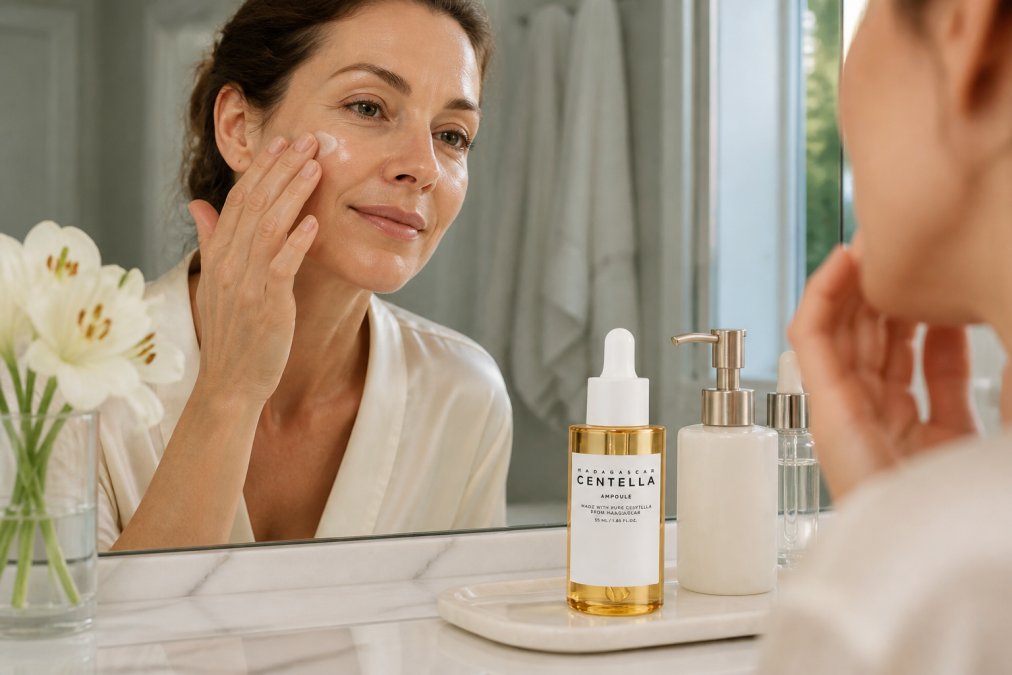
Retinoids are the most evidence-supported active ingredient in anti-aging skincare, with decades of research confirming their role in stimulating collagen production, accelerating cell turnover, and addressing fine lines, hyperpigmentation, and skin texture irregularities.
A sensible beginner protocol:
- Start with the lowest available concentration (0.025% to 0.05% retinol)
- Apply once per week for the first two weeks
- Increase to twice weekly for weeks three and four
- Move to every other night through month two
- Assess tolerance before increasing frequency or concentration
Always apply retinol at night. UV exposure degrades retinoids and increases photosensitivity. Follow with a moisturizer to support barrier function. Sun protection is non-negotiable the following morning.
Purging vs. Irritation: How to Tell the Difference
Purging is a temporary increase in breakouts when cell turnover accelerates, bringing existing congestion to the surface faster. It appears in areas where you normally break out, starts within the first two weeks, and resolves within four to six weeks.
Irritation is redness, flaking, burning, or sensitivity in areas where you don't normally break out, and it worsens with continued use. If your skin is reacting in new locations and intensifying, stop and reassess. If breakouts are concentrated in familiar areas, you're likely in the purging phase. Give it six weeks before drawing conclusions.
Ingredient Layering Conflicts to Avoid in Your Professional Grade Skincare Routine
Building a professional grade skincare routine requires understanding which combinations undermine each other.
Retinol + AHAs/BHAs on the same application: Both are active exfoliants. Using them together increases irritation risk without proportional benefit. Use them on alternating nights.
Vitamin C (ascorbic acid) + Retinol: Ascorbic acid is most effective at a low pH (around 2.5-3.5). Retinol performs best at a higher pH (5.5-6). Applying them simultaneously creates a pH conflict that reduces efficacy of both. Apply vitamin C in the morning and retinol at night.
Niacinamide + Ascorbic Acid (direct mix): At high concentrations, these can react to form complexes that reduce efficacy of both. Layering them with a few minutes between application largely resolves this.
Peptides + Direct Acids: Acidic environments can break down peptide bonds before they reach dermal layers. Apply peptides after your pH has normalized, not immediately after acid application.
| Combination | Problem | Solution |
|---|---|---|
| Retinol + AHAs/BHAs | Compounded irritation, barrier disruption | Alternate nights |
| Vitamin C + Retinol | pH conflict, reduced efficacy of both | Vitamin C AM, retinol PM |
| Niacinamide + Vitamin C | Efficacy-reducing complex formation | Layer with 5-min gap |
| Peptides + Acids | Peptide bond degradation | Apply peptides post-pH recovery |
| Retinol + Benzoyl Peroxide | Retinol oxidation and degradation | Never same application |
Top Professional Grade Skincare Products for Home Use
The VIRALCORE HEALTH collection is built on the principle that professional grade skincare should be accessible without sacrificing formulation integrity.
Hyaluronic Acid Facial Essence ($16.62), Hydration Foundation
The Hyaluronic Acid Facial Essence ($16.62) contains sodium hyaluronate and glycerol in a 15ml format, designed for universal skin types. Sodium hyaluronate has smaller molecular weight than its parent compound, enabling better penetration into upper skin layers. Glycerol reinforces the humectant effect, supporting sustained hydration between applications.
Best for: Anyone beginning a professional grade skincare routine who needs a reliable, non-comedogenic hydration base before layering actives.
Madagascar Centella Asiatica Nursing Solution ($42.21), Barrier Repair
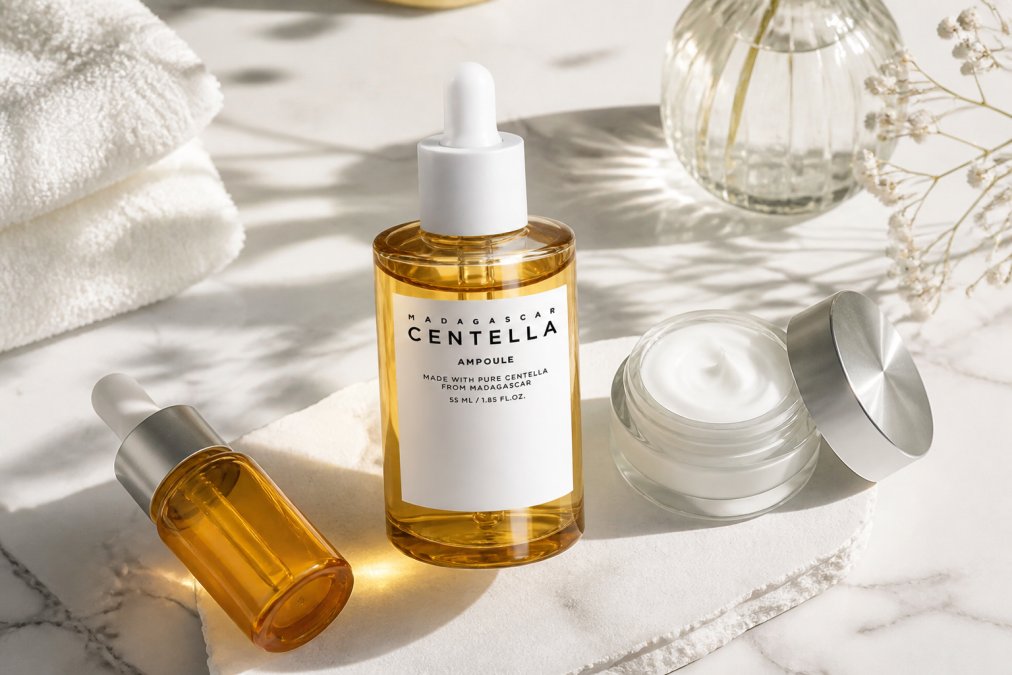
Centella asiatica is one of the most evidence-supported botanical actives in dermatology, with documented effects on skin barrier reinforcement, wound healing, and anti-inflammatory response. The Madagascar Centella Asiatica Nursing Solution ($42.21) delivers this active in a 55ml format with a three-year shelf life, indicating formulation stability that most botanical products don't achieve.

Reach for this when the skin barrier is compromised: during retinol adjustment, post-exfoliation sensitivity, or environmental stress.
Best for: Adults in the retinol adjustment phase, those with reactive or sensitized skin, and anyone addressing barrier disruption.
Eye Cream 30ml ($19.15), Targeted Periorbital Treatment
The periorbital zone is among the thinnest on the face and among the first to show aging signs. The Eye Cream 30ml ($19.15) addresses this zone directly with a dedicated cream formulation. At 30ml, this is a generous volume for a periorbital product.

Best for: Adults 35 and older addressing early-to-moderate periorbital aging. Apply with the ring finger using gentle tapping motions, never dragging.
Iontophoresis Beauty Device ($262.17), Clinical Technology at Home
Iontophoresis uses low-level electrical current to drive charged molecules deeper into the skin than passive topical application allows. The Iontophoresis Beauty Device ($262.17) brings this technology into a home-use format, combining negative ion function with vibration and heat technology.
The device addresses anti-edema, pore minimization, skin tightening, acne treatment, skin rejuvenation, dark circles, and wrinkle reduction. The ABS and stainless steel construction with a USB-rechargeable 500mAh battery positions this as a durable clinical tool. Ionic delivery amplifies bioavailability of serums applied during treatment.
Best for: Adults seeking to enhance active ingredient penetration and address multiple skin concerns simultaneously. Not suitable for use over active breakouts or broken skin.
Hot Cold Compress Dual-Use Beauty Instrument ($231.21), Multi-Modal Treatment
Thermal contrast therapy, alternating between heat and cold application, has a long history in clinical aesthetics for its effects on circulation, inflammation, and product absorption. The Hot Cold Compress Dual-Use Beauty Instrument ($231.21) combines this with blue light and red light facial massage in a single device.
Blue light targets surface bacteria associated with acne. Red light penetrates more deeply, supporting circulation and collagen production. Heat opens pores and improves serum absorption; cold reduces inflammation and tightens pore appearance post-treatment.
Best for: Adults managing acne alongside aging concerns who want a single device addressing both.
Budget-Friendly Clinical Alternatives and Sustainability Considerations
Clinical-grade skincare doesn't require significant ongoing investment. The VIRALCORE HEALTH Hyaluronic Acid Facial Essence at $16.62 and Eye Cream 30ml at $19.15 represent entry-level clinical skincare at accessible price points without compromising active ingredient quality.
For budget-conscious routines: prioritize actives over aesthetics. A simple, pH-balanced cleanser, a well-formulated hyaluronic acid essence, a targeted retinol product, and broad-spectrum sun protection covers the clinical fundamentals. One well-chosen active, introduced correctly, produces better outcomes than five products layered without consideration of ingredient compatibility.
Concentrated formats like the 15ml essence reduce packaging-to-product ratio compared to diluted alternatives. Longer shelf life (the Centella Asiatica Nursing Solution carries a three-year shelf life) reduces waste from product expiration. These are practical sustainability advantages of well-formulated, stable products.
According to American Academy of Dermatology guidance on skincare routines, a simplified, consistent routine with clinically appropriate actives outperforms complex, inconsistent routines for most skin concerns.
The most common obstacle to effective professional grade skincare isn't access to the right products, it's building a routine that's consistent, correctly sequenced, and matched to your skin's actual needs. VIRALCORE HEALTH's collection is designed to make that straightforward: science-backed formulations, intentional product design, and clinical device technology at accessible price points. Start with the Hyaluronic Acid Facial Essence as your foundation, add the Centella Asiatica Nursing Solution during adjustment phases, and introduce devices when you're ready to amplify your results.
Frequently Asked Questions
Q: What is the difference between medical-grade and over-the-counter skincare?
A: Medical-grade or clinical-grade skincare contains higher concentrations of active ingredients, such as retinoids, alpha hydroxy acids, and ascorbic acid, formulated to reach the dermal layers where cell turnover and collagen production occur. Over-the-counter products sold at drugstores are regulated as cosmetics by the FDA, which limits how deeply they can claim to affect skin. Clinical formulations undergo dermatological testing for both safety and ingredient stability, which affects how well the actives actually perform on your skin.
Q: Do I need a prescription to buy professional-grade skincare?
A: Most professional grade skincare for home use does not require a prescription. True prescription products, such as tretinoin at higher concentrations, do require a licensed provider. However, many clinical-strength formulas containing retinol, salicylic acid, peptides, and growth factors are available without a prescription. The key distinction is concentration and formulation quality, not prescription status. Always patch-test new actives and introduce them gradually, especially if you have skin sensitivity.
Q: What are the main hyaluronic acid benefits for skin?
A: Hyaluronic acid is a humectant that draws water into the skin, supporting the skin barrier function and improving skin texture and radiance. Sodium hyaluronate, its salt form, has a lower molecular weight that allows better topical application and absorption. Regular use helps maintain hydration across all skin types, reduces the appearance of fine lines and wrinkles caused by dehydration, and creates a plump, smooth surface that makes other active ingredients more effective. It works best applied to damp skin before a moisturizer.
Q: How do I safely start retinol usage as a beginner?
A: Start with the lowest available concentration, typically 0.025% to 0.05% retinol, and apply it every third night for the first two to three weeks. Retinoids increase cell turnover, which can cause dryness and flaking initially. This is normal adjustment, not damage. Avoid layering retinol with alpha hydroxy acids, beta hydroxy acids, or ascorbic acid on the same night, as this combination increases the risk of irritation. Always follow with a non-comedogenic moisturizer and apply sun protection factor every morning without exception.
Q: Can professional-grade skincare products cause skin irritation?
A: Yes, clinical-strength actives can cause irritation, particularly retinoids, high-concentration alpha hydroxy acids, and vitamin C serums. The critical distinction is whether you are experiencing purging, a temporary increase in breakouts as cell turnover accelerates, or true irritation from an incompatible formula. Purging typically resolves within four to six weeks and stays in areas where you already break out. Persistent redness, burning, or reactions in new areas signal irritation, and you should reduce frequency or discontinue the product.
This article was written using GrandRanker